
A First for the Netherlands
Two Major Works by Helen Frankenthaler Donated
News — Sep 22, 2025
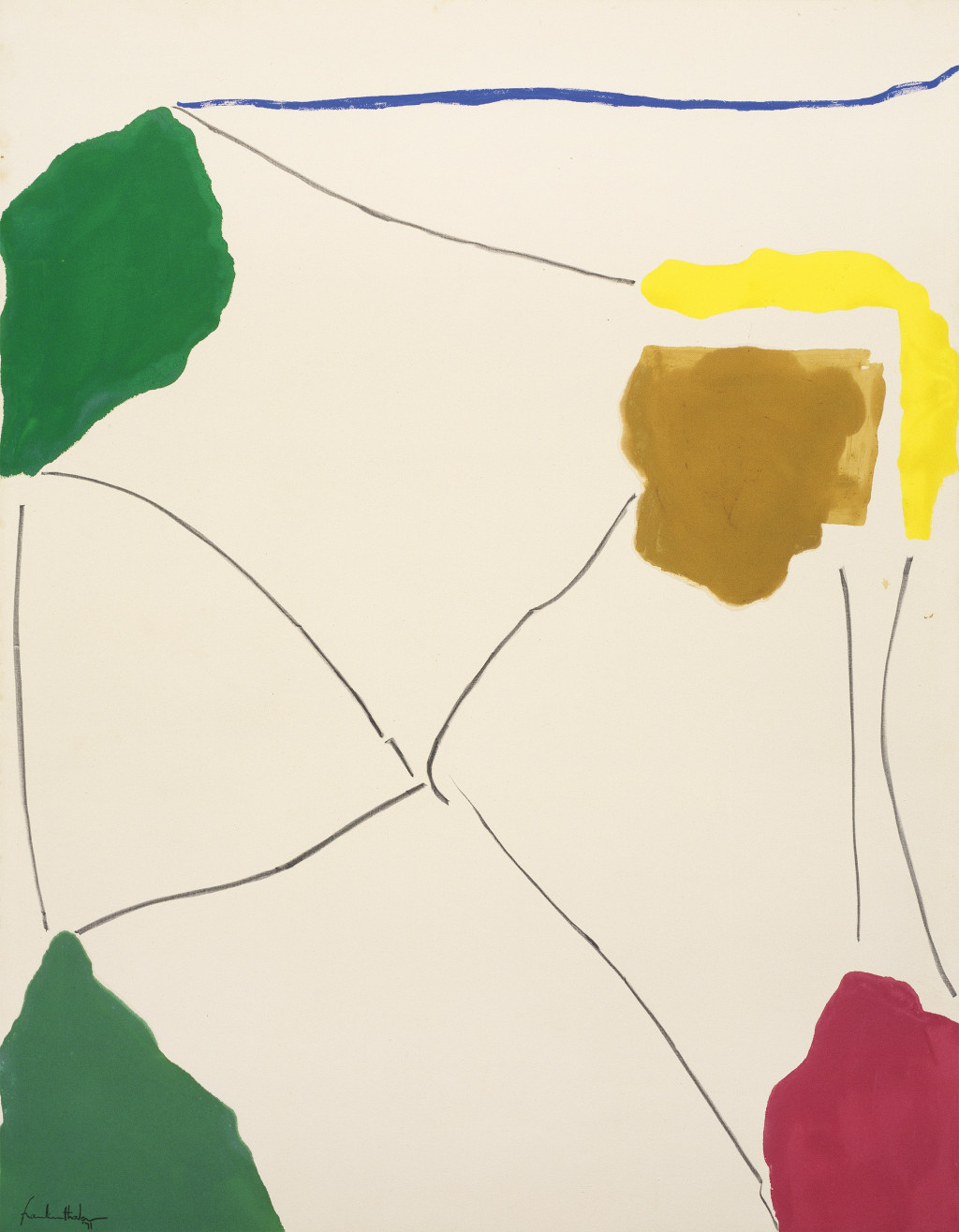
For the first time, the Netherlands will have paintings by the American artist Helen Frankenthaler, one of the most important painters of the twentieth century, renowned for her groundbreaking use of color and space. The Stedelijk Museum Amsterdam has received two key works from her oeuvre as a gift from the Helen Frankenthaler Foundation: Beach Scene (1961) and Hommage à H.M. (1971), as part of the Foundation’s collaborative efforts to expand knowledge of the influential artist on a global scale. This remarkable donation is a milestone both for the museum and for the Dutch national collection. The two works will be on view at the Stedelijk from Monday, September 22.
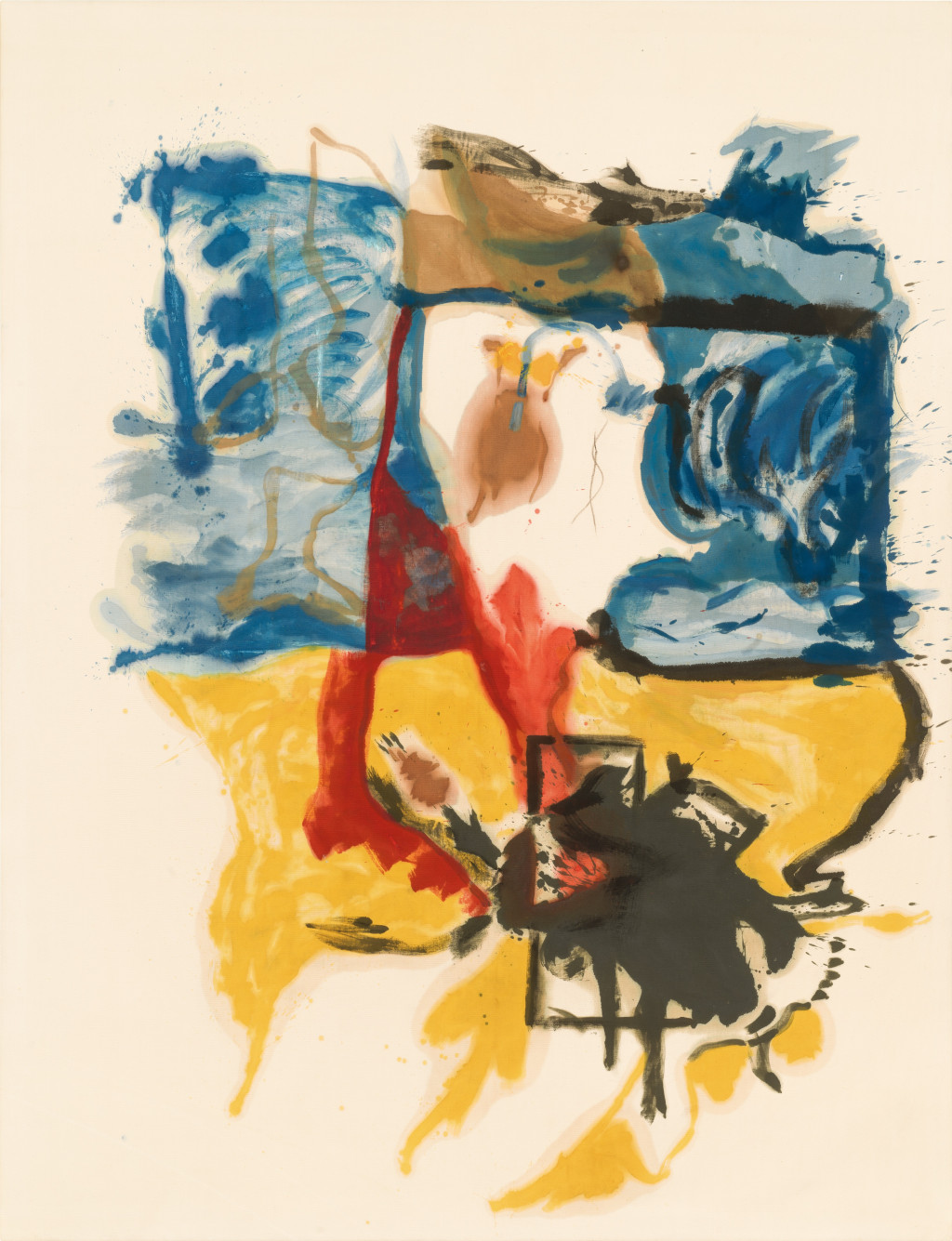
Beach Scene is an expressive and monumental canvas from the early 1960s, the period in which Frankenthaler achieved major international recognition. In this work she employs her distinctive “soak-stain” technique, allowing thinned paint to seep into unprimed canvas. Expanses of yellow, blue, red, and black form a composition that hovers between abstraction and a figurative evocation of sea and shore. For Frankenthaler, painting was never about depicting something concrete, but about conjuring an experience.
Ten years later she created Hommage à H.M., a restrained yet expansive work. Here, areas of color are pushed to the edges of the canvas and connected by thin black lines. Frankenthaler relies on her fluid approach to painting, resulting in a bright and rhythmic composition. The work was made shortly after Frankenthaler’s travels through Morocco in 1970, where she drew inspiration from decorative motifs in architecture and textiles. The title pays tribute to Henri Matisse who was similarly inspired by a trip to Morocco nearly sixty years before. The result is a serene homage to color, form, and light.
“These two paintings are a profoundly meaningful addition to our collection,” says Rein Wolfs, Director of the Stedelijk Museum Amsterdam. “We hold a strong representation of postwar American art, but it is largely dominated by male artists such as Rothko, Newman, De Kooning, and Motherwell. The absence of Helen Frankenthaler was deeply felt. This donation aligns seamlessly with our ambition to give greater visibility to women artists who have long been overlooked. Works of this historic significance are now nearly impossible to acquire. We are therefore immensely grateful to the Helen Frankenthaler Foundation for this extraordinarily generous gift.”
“Committed to fostering engagement with Helen Frankenthaler's legacy across the globe as part of our mission to support public understanding of the visual arts, the Foundation is delighted that these paintings have found new homes in such a significant context as the Stedelijk with its noted collection of 20th and 21st century art,” states Elizabeth Smith, Executive Director of the Helen Frankenthaler Foundation. “It has been gratifying to support the museum’s interest in acquiring major works by Frankenthaler, aligning with growing awareness in Europe of her work’s art historical significance and continued relevance for current and recent art practice.”
ABOUT HELEN FRANKENTHALER
Helen Frankenthaler (1928–2011) is widely credited for playing a pivotal role in the transition from Abstract Expressionism to Color Field painting and is best known for her invention of the soak-stain technique. Throughout a career spanning more than six decades, Frankenthaler experimented tirelessly, producing unique paintings on canvas and paper, as well as ceramics, sculpture, tapestry, and especially printmaking. Frankenthaler’s substantial body of work continues to make a profound impact on contemporary art and is represented in the collections of major museums worldwide.
ABOUT THE HELEN FRANKENTHALER FOUNDATION
Established and endowed by Helen Frankenthaler during her lifetime, the Helen Frankenthaler Foundation advances the artist’s legacy and inspires a new generation of practitioners through a range of philanthropic, educational, and research initiatives. Since becoming active in 2013, the Foundation has continued to strategically expand its program, which includes organizing and supporting significant exhibitions of the artist’s work, fostering new research and publications, advancing educational programs in partnership with arts organizations around the world, and launching groundbreaking initiatives that foster systemic change in the field. As a primary resource on the artist, and a steward of her collection and archive, the Foundation holds an extensive selection of Frankenthaler’s work in a variety of mediums, her collection of works by other artists, and original papers and materials pertaining to her life and work.
NOTES TO EDITORS
For more information and images, please contact the Press Office of the Stedelijk Museum, pressoffice@stedelijk.nl.
For more information, visit frankenthalerfoundation.org